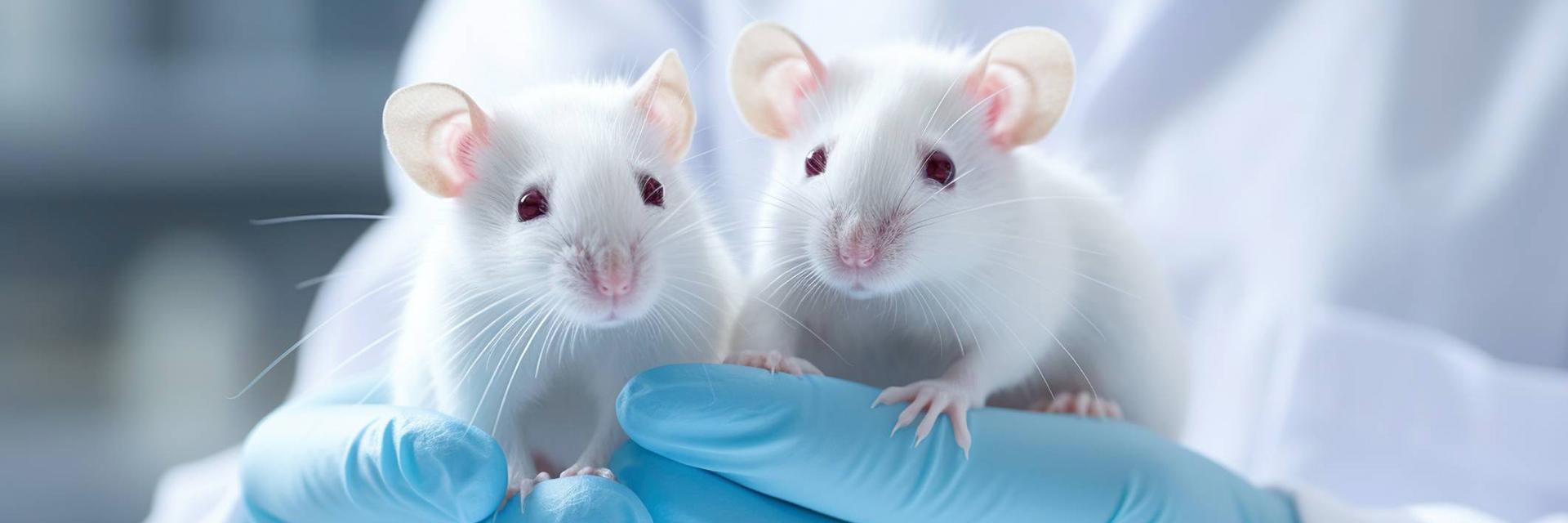
The development of alternative methods to animal testing is an essential component of the system regulated on the basis of Directive 2010/63/EU (eur-lex.europa.eu) on the protection of animals used for scientific purposes, which obliges all the competent public administrations, and it is because it depends on moving towards the ultimate objective of the total replacement of animals in research procedures.
There are already technological advances that make it possible to reduce the use of a large number of animals, but it is still not possible to replicate the complexity and reactions of living organisms. The report, Non-Animal Methods in Science and Regulation (publications.jrc.ec.europa.eu), Status Report 2024 of the EU Reference Laboratory for alternatives to animal testing (EURL ECVAM) integrated in the Joint Research Centre (JRC) of the European Commission, contains a large number of research and initiatives that are helping to implement alternative methods. This includes a range of innovative technologies, in vitro methods using 3D tissues and cells, organ-on-chip technologies, computational models (artificial intelligence and machine learning) and omics technologies (transcriptomics and metabolomics), which are being developed to improve efficiency and effectiveness in chemical risk assessments. And also in basic and applied research in which most of the use of animals in experimentation occurs. The content of this report reflects well the state of the art in this matter and the collective effort made.
In this context, the promotion of research in alternative methods is also an essential objective that is assumed by the Ministry of Science, Innovation and Universities, firstly, through the financing of projects for this purpose, but also through the dissemination of the available advances.
The three funding agencies for research and innovation in Spain, under the Ministry of Science, Innovation and Universities, the State Research Agency (aei.gob.es) and the Carlos III Health Institute (isciii.es) and the Centre for Industrial Technological Development (cdti.es), grant aid through different types of calls for the development of projects for this purpose, in particular through calls for Knowledge Generation Projects (AEI) and CII+II Cooperation Projects.
The European Commission also provides funding for the development of new alternative methods through various programmes and calls for proposals, some of which are listed below:
Cluster Health HE (ec.europa.eu):HORIZON-HLTH-2026-01-TOOL-03: Integrating New Approach Methodologies (NAMs) to advance biomedical research and regulatory testing.
EIC Advanced Innovation Challenges (eic.ec.europa.eu):Translating Disruptive New Approach Methodologies (NAMs) into Practice.
EIC Pathfinder Challenge (eic.ec.europa.eu):Biotechnology for Healthy Ageing.
The European Office of the Spanish Foundation for Science and Technology (fecyt.es), provides up-to-date information on European research programs in Spain, boosts the participation and leadership of Spanish researchers and R&D centers in Horizonte Europa.
Another platform providing information on alternative methods is Tracking System for Alternative methods towards Regulatory acceptance (tsar.jrc.ec.europa.eu). This platform has been developed by EURL ECVAM, to disseminate information on alternative methods considered by member states and observer organizations in the International Cooperation on Alternative Testing methods (ICATM) that integrates representations from the EU, Canada, USA, Republic of Korea, Brazil, China and Japan and aims to promote coordination and cooperation in the research, validation and regulated use of alternative methods. TSAR follows the progress of alternative methods to the use of animals in tests with chemical or biological agents, towards their acceptance as recognized methods for use in various sectors. Its content covers: the status of the situation in terms of its acceptance, a summary description of each individual method integrated into the JRC database, EURL ECVAM Alternative Methods to Animal experimentation, and relevant documents associated with the acceptance process.
ETPLAS, the European Platform for Education and Training in Laboratory Animal Sciences, has an online course Module EU 52 (learn.etplas.eu) introductory to the search and identification of (existing) methods alternative to the use of animals in research. It develops the replacement concept and describes the necessary steps in the work of its introduction.
On the other hand, FELASA, the Federation of European Associations of Laboratory Animal Science, is in the process of developing a syllabus on education and training in replacement (felasa.eu) of personnel involved in the use of laboratory animals (which will detail objectives and results of this training and will include recommendations to make this training effective (supplementary material, training scenarios, exercises).
In Spain, the Spanish Network for the Development of Alternative Methods to Animal Experimentation – REMA (remanet.net) promotes the dissemination of this problem and the progress achieved in this field. REMA is a discussion forum to achieve a better and more rational use of experimental animals, promoting the development, validation and use of in vitro methods, in order to achieve a better and more effective application of the principles of reduction, refinement and replacement of animal use in experimentation.
Also in the field of alternative methods to the use of animals in research, ISCIII finances and operates a Platform on Biobanks and Biomodels (isciii.es) that provides research support services. In particular, the hubs of animal and organoid models constitute a relevant contribution to the development of alternatives in this field at the service of the biomedical research system in Spain.The ISCIII publishes a list of training courses (isciiibiobanksbiomodels.es) taught by the units of its Biomodels and Biobanks Platform.Also the 3RS Unit of the ISCIII (https://www.isciii.es/services/comites-etica/unit-3rs) presents a useful collection of training and outreach resources as well as links to search engines, databases and inventories on 3RS and alternative methods in particular.
To promote progress towards the use of alternative methods in research, the European Commission has launched an ERA Action for the development and implementation of ‘New Approach Methods’ or alternative methods to the use of animals in Research. Spain participates in the Assembly and in the four Working Groups of the ERA Action constituted on NAMs whose work will be developed between 2025-2027 and will lay the foundations for progress in this area:
Development of common NAMs and infrastructures in the EU.
Validation/qualification, acceptance and incorporation of NAMs.
Training and training.
Openness and awareness.