Transfer of knowledge

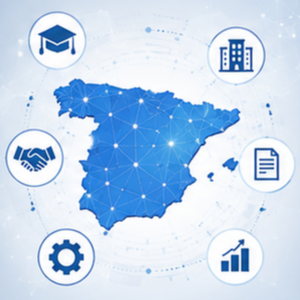
The transfer of knowledge is one of the priority axes of action in the Spanish Strategy of Science, Technology and Innovation. The main objective is to place Spain among the countries with the highest level of innovation, making the transfer of knowledge have an impact in terms of generating progress.

To this end, it is necessary to promote the transfer of knowledge and develop two-way links between science and companies (especially SMEs) through mutual understanding of needs and objectives. In addition, it is extremely important to ensure public-private cooperation at the different stages of the value chain: from the initial stages of the development of technologies in which the application of knowledge will be favored, to the arrival on the market of products of interest to society. National R&D&I must prioritize and respond to the challenges of the strategic sectors.


Public Purchase of Innovation

Innovation is one of the indispensable factors for the country’s economic growth, which is why it occupies a prominent place in European and national policies. In addition, it is configured as one of the keys to job creation, medium-term growth, productivity and, ultimately, the improvement of competitiveness.

The Ministry of Science, Innovation and Universities carries out actions that promote innovation both in companies and in public entities. In particular, the Public Purchase of Innovation (CPI) aims to promote innovation in the public sector and the private sector through public procurement, so that innovative solutions are incorporated in Public Administrations and innovation in companies is encouraged.

Taxation and bonuses for R&D&I activities. Seal of Innovative SMEs

The Public Administration has several instruments to promote business innovation, such as tax incentives for research and development and/or technological innovation activities and bonuses on the Social Security quota for research personnel.

As main fiscal instruments, the Binding Motivated Reports and the Innovative SME seal stand out. The Binding Motivated Reports provide legal certainty in the application of deductions and bonuses for Research, Development and/or Technological Innovation (R+D+I). On the other hand, the creation of the Innovative SME seal and its registration seeks to put these companies in value, promote their identification and formulate specific policies.

These instruments are of a horizontal nature and of free and general application. In addition, they are oriented to encourage the initiative of the private sector without conditioning the innovative field to which the company is oriented.

Design as an engine of innovation

Investment in innovation and design is a bet for the present and for the future. Innovation makes it possible to achieve business excellence and market leadership. Companies’ commitment to innovation is one of our best tools to promote competitiveness, social progress and long-term economic growth. Design, for its part, is a source of wealth and well-being. But, in addition, design is the engine of innovation, always being present in the productive process. Design is the foundation and driving force of innovation.

Both, innovation and design, complement and interact with each other. Innovation is a determining element for the advancement and evolution of design, opening new fields of development to it, while design is a tool that constitutes the basis and driving force of innovation.

Ecosystems of innovation

Public policies aimed at promoting regional innovation ecosystems have evolved in recent years towards a new, more participatory and collaborative approach. This shift in science and innovation policies points to a new model of multi-level governance around shared challenges, with a territory-oriented vision that promotes the efficient use of the capacities of all regions, fosters interregional cooperation and addresses persistent territorial innovation gaps.

Cities for Innovation-Red INNTECLA

This distinction recognises the leading cities that have supported infrastructure investments that promote economic sustainability and improve our growth pattern based on knowledge and innovation. Local authorities play a fundamental role in achieving the cohesion of innovation agents thanks to their proximity to citizens, companies and public institutions and bodies.

Along with the distinction, the Network of Cities of Science and Innovation (INNTECLA) has been launched.

Strategic Energy Technology Plan (SET PLAN)

The European Strategic Energy Technology Plan (SET Plan) is a key instrument for driving the transition to a climate-neutral energy system by developing innovative, low-carbon and cost-competitive technologies. The SET Plan was established in 2007 and, since the creation of the Energy Union in 2015, became one of the main instruments of its fifth pillar dedicated to research, innovation and competitiveness. Spain is a member of the Steering Group and the Bureau, the governance bodies of the SET Plan.

Mission Innovation

Mission Innovation is a global initiative made up of 23 countries plus the EU, to get energy innovation to accelerate the decarbonisation of all sectors of the economy.

Mission Innovation was announced at COP21 on November 30, 2015, when world leaders met in Paris to commit to ambitious efforts to combat climate change.

Spaces for experimentation for innovation

The technological change that our society faces poses enormous challenges for the public sector, not only as a promoter of innovation but as an innovative subject in itself, in a secure and controlled framework.

There are instruments that allow us to promote and accelerate innovation from the public, generating spaces for development to give new answers to existing needs. They are known as sandboxes, living labs and testbeds, which enable public institutions and companies a suitable environment for innovation and experimentation.